
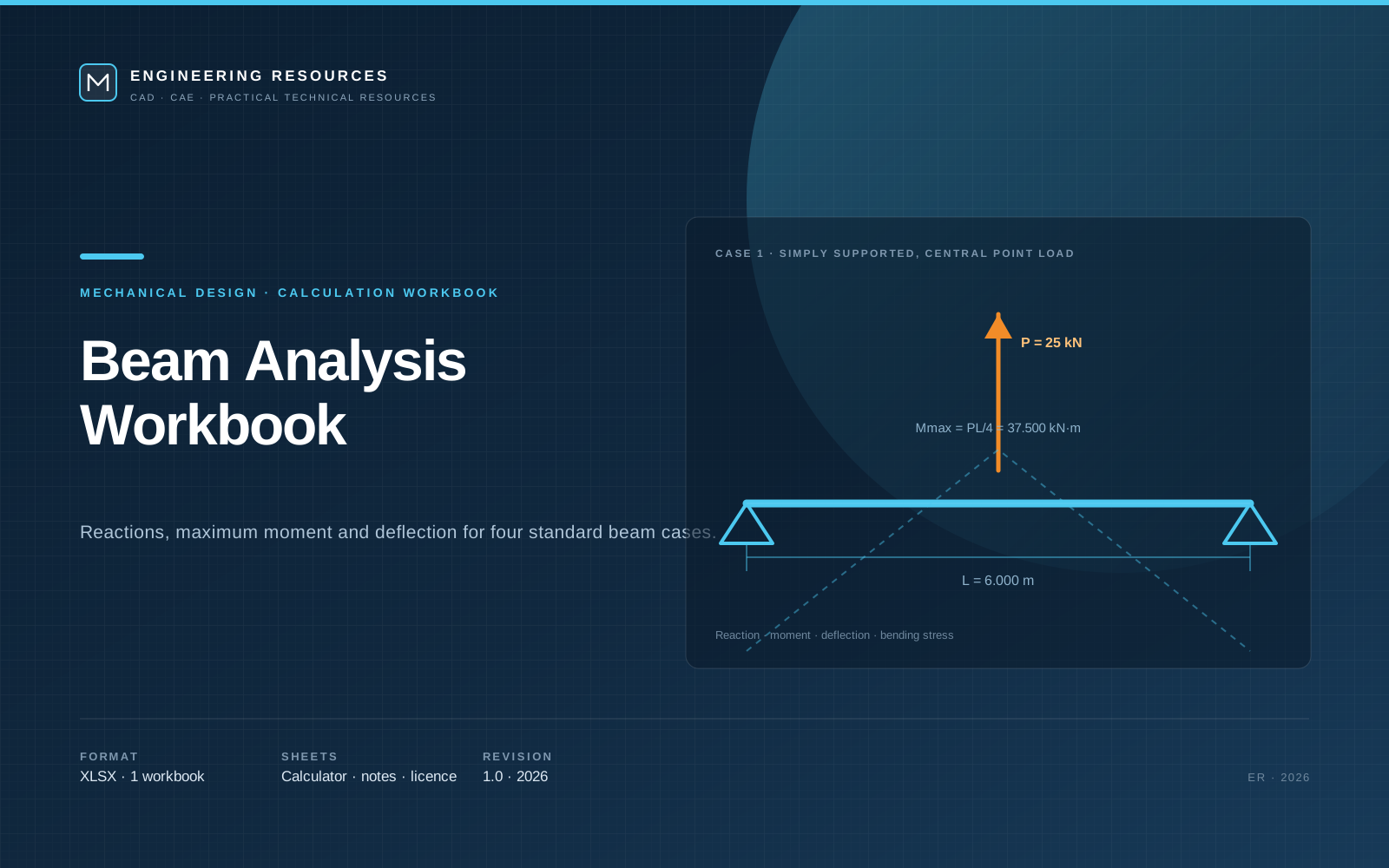
Beam Analysis Workbook
An Excel workbook for simply supported and cantilever beams. Enter span, load and section data; the sheet returns reactions, maximum moment, deflection, bending stress and a serviceability check.
A focused home for engineering guides, worked examples, templates and technical resources. Understand what a resource covers, what it includes and where it applies before you choose it.
Browse the catalogue by engineering area, or open the full collection to compare every published resource.
Machine design, mechanisms, calculations and component references.
Models, assemblies, drawings and design documentation.
Structural analysis, meshing, modal studies and simulation workflows.
Fluid flow, heat transfer, post-processing and thermal analysis.
Handbooks, formula references, technical guides and worked examples.
Calculation workbooks, reporting templates and practical tools.
Engineering work depends on context. A drawing, calculation workbook or simulation guide is useful only when its scope and intended use are clear. Our product information is designed to help you evaluate fit before you decide.
Technical context is part of the product—not fine print.
Every published resource shows its price, contents, compatibility, scope and licence before you order.
An Excel workbook for simply supported and cantilever beams. Enter span, load and section data; the sheet returns reactions, maximum moment, deflection, bending stress and a serviceability check.
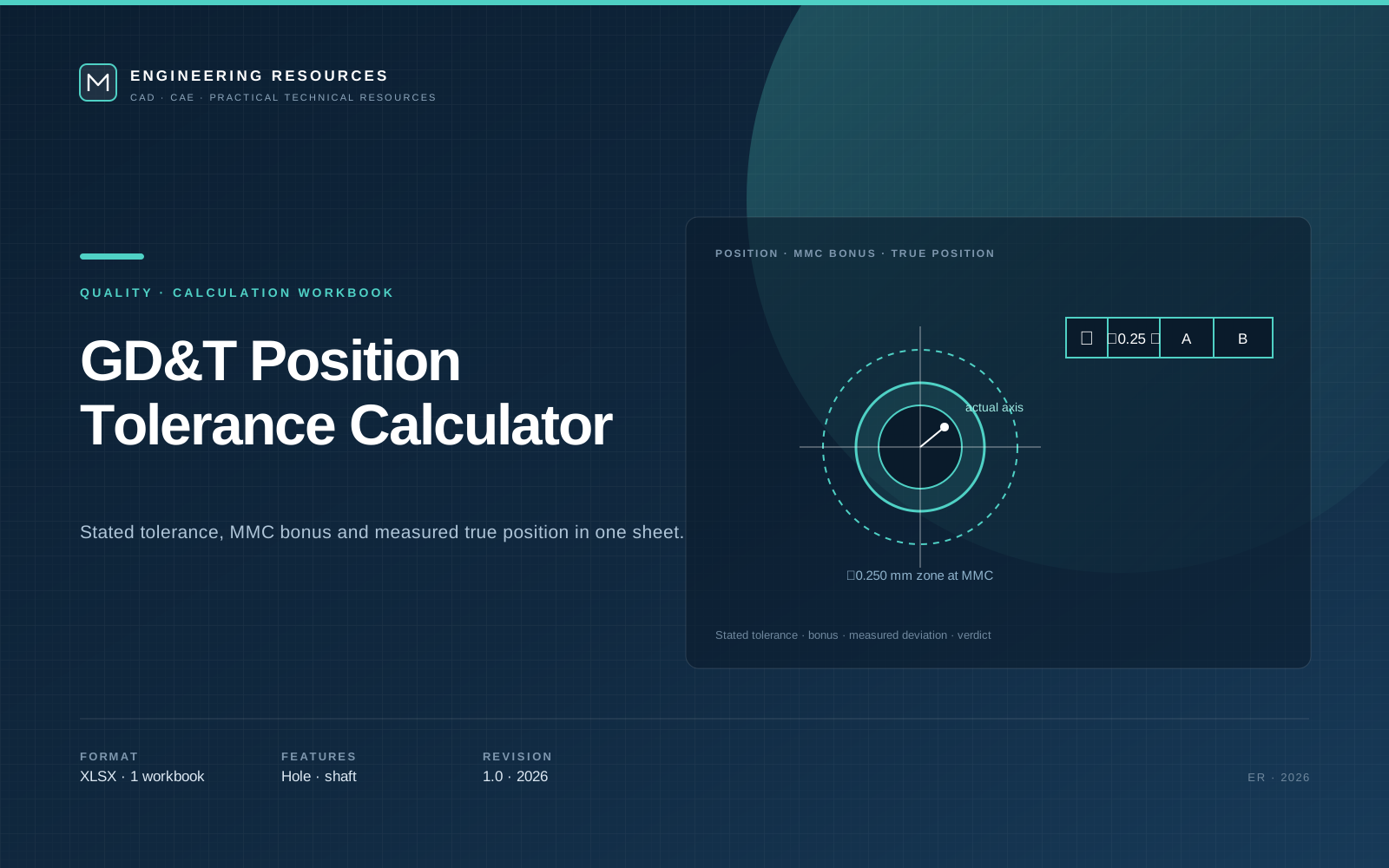
An Excel calculator for diametrical position tolerance. Enter the callout, feature sizes and measured X/Y deviation to get the MMC bonus, total allowance and pass or fail verdict.
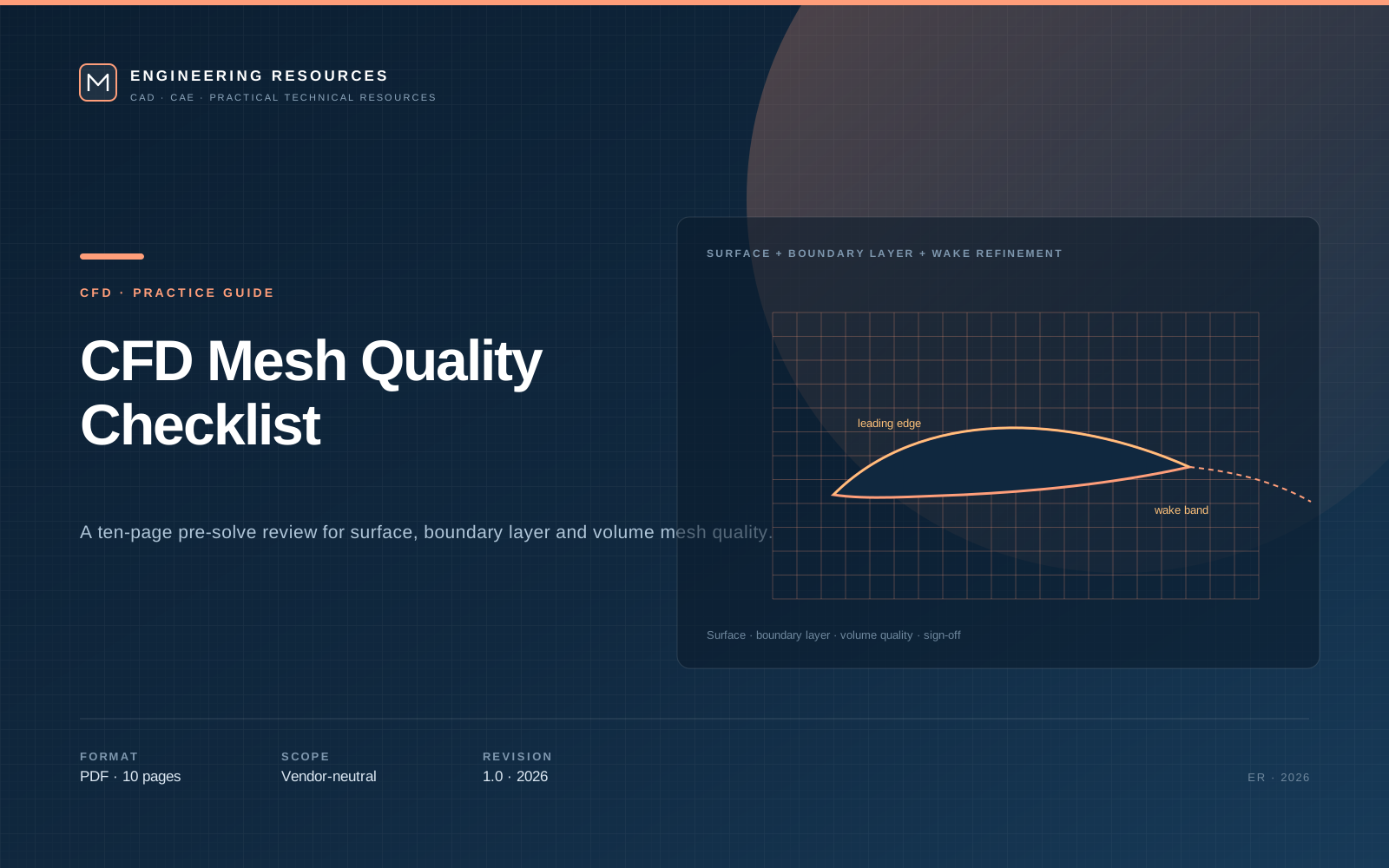
A practical PDF checklist for reviewing a CFD mesh before solving: geometry, surface mesh, boundary layer, volume metrics, solver readiness and a sign-off record.
The catalogue follows a simple standard: buyers should be able to judge a resource on its actual contents and limits.
Descriptions should list the actual files and explain what each one is for.
Prerequisites, units, versions and assumptions should be visible where relevant.
Product pages should explain exclusions and what the material does not establish.
Genuine sample pages and images help visitors understand the format and quality.
The catalogue covers CAD, mechanical design, CAE, FEA, CFD, thermal analysis, engineering reference material and productivity tools. Each published resource is a completed file with its contents, scope and licence stated on the product page.
Each published product should explain its intended audience, skill level, prerequisites, included files, software context, scope and limitations. Review those details before purchasing.
Compatibility is product-specific. A product page will state the software and version information that is known or tested. Do not assume compatibility where it is not explicitly listed.
After payment is confirmed, the file is delivered by secure download link, usually within one business day. The product page states the format, licence and delivery time for that resource.
Yes. Use the resource request page to suggest a topic, workflow, document or template. Requests help us understand what would be useful to the engineering community.
No. Educational and reference resources do not replace professional judgement, applicable standards, independent checking or qualified review for real-world and safety-critical work.
Tell us about the engineering task, software or topic you need help with. Your suggestion can guide the next release.